
Choosing the right marketing approach can be challenging when a business needs to attract customers, build brand awareness, and manage its budget at the same time. An advertising agency can help bring these activities together through planning, creative work, media buying, and campaign measurement.
However, hiring an agency is not automatically the best choice for every company. The right decision depends on your goals, internal skills, budget, and the type of support you need. Understanding the benefits of hiring an advertising agency can help you decide whether outsourcing makes sense for your business.
What Does an Advertising Agency Do?
An advertising agency helps businesses plan, create, manage, and evaluate advertising campaigns. Depending on its expertise, an agency may handle a single activity, such as paid search, or coordinate several channels under one strategy.
For example, a small business launching a new service may need audience research, ad copy, landing page design, paid campaign setup, and conversion tracking. An agency can coordinate these activities so that each part supports the same business objective.
Advertising agencies and digital marketing agencies can offer overlapping services, but their focus varies. Advertising agencies often concentrate on campaign strategy, creative execution, and media placement. Digital marketing agencies may also provide broader services such as organic search, content, email, and website optimisation.
What Services Do Advertising Agencies Provide?
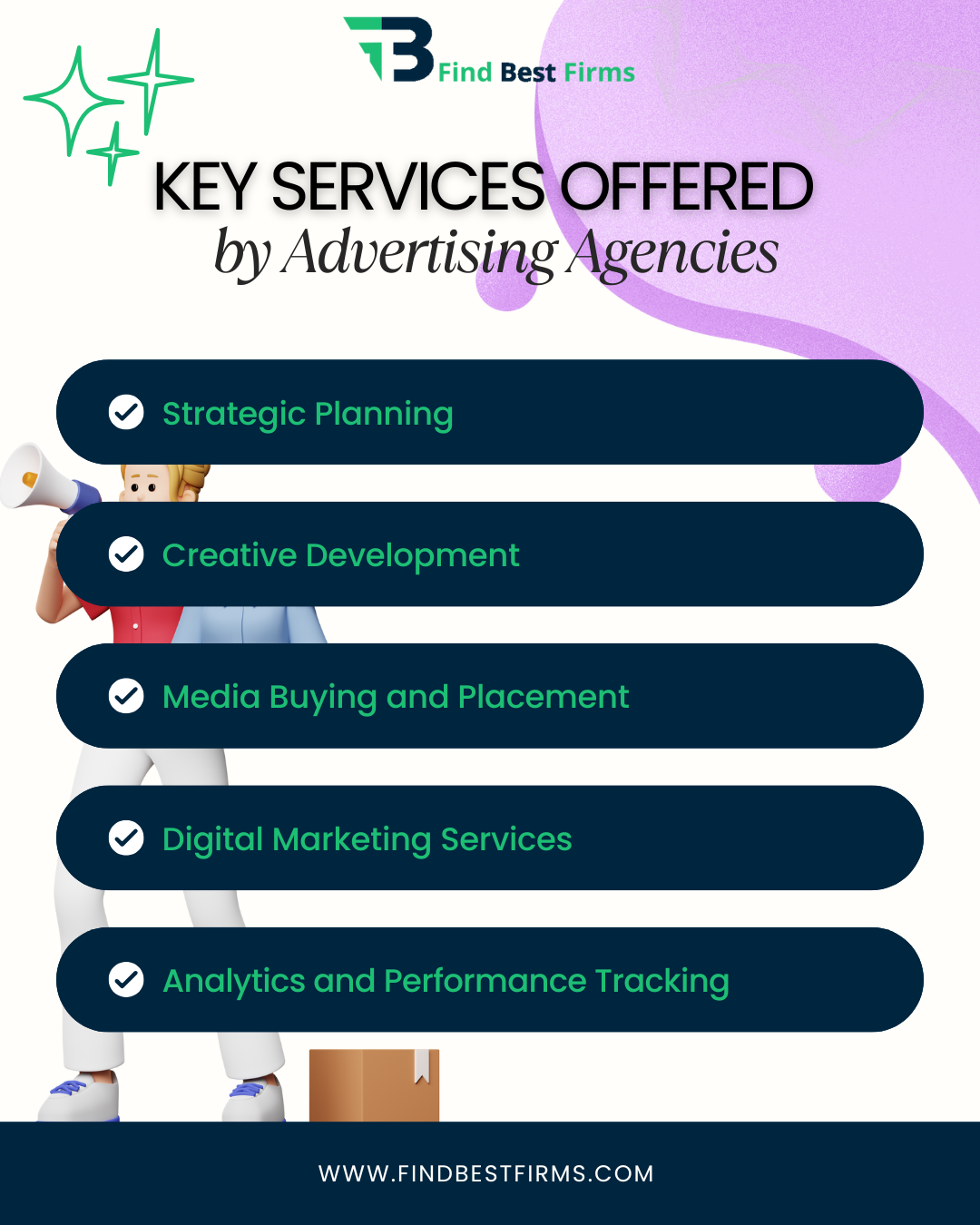
Services depend on the agency's size and specialisation. A full-service agency may coordinate several of the following activities:
Advertising Strategy
Researching audiences, reviewing competitors, setting campaign goals, and choosing channels based on the business objective.
Creative Development
Creating ad copy, graphics, videos, campaign concepts, and messaging that fit the brand and target audience.
Media Planning and Buying
Choosing where ads should appear, planning budgets, managing placements, and adjusting spend based on performance.
Digital Advertising
Managing paid search, paid social, display ads, retargeting, and other suitable online campaigns.
Brand and Content Support
Developing campaign messaging and creative assets that help customers recognise and understand the brand.
Analytics and Reporting
Tracking conversions, acquisition costs, engagement, and other metrics connected to campaign objectives.
Some businesses also need help with website content and organic visibility. Depending on the campaign, working with a specialist in content marketing agency services can support the broader customer journey beyond paid advertisements.
10 Benefits of Hiring an Advertising Agency
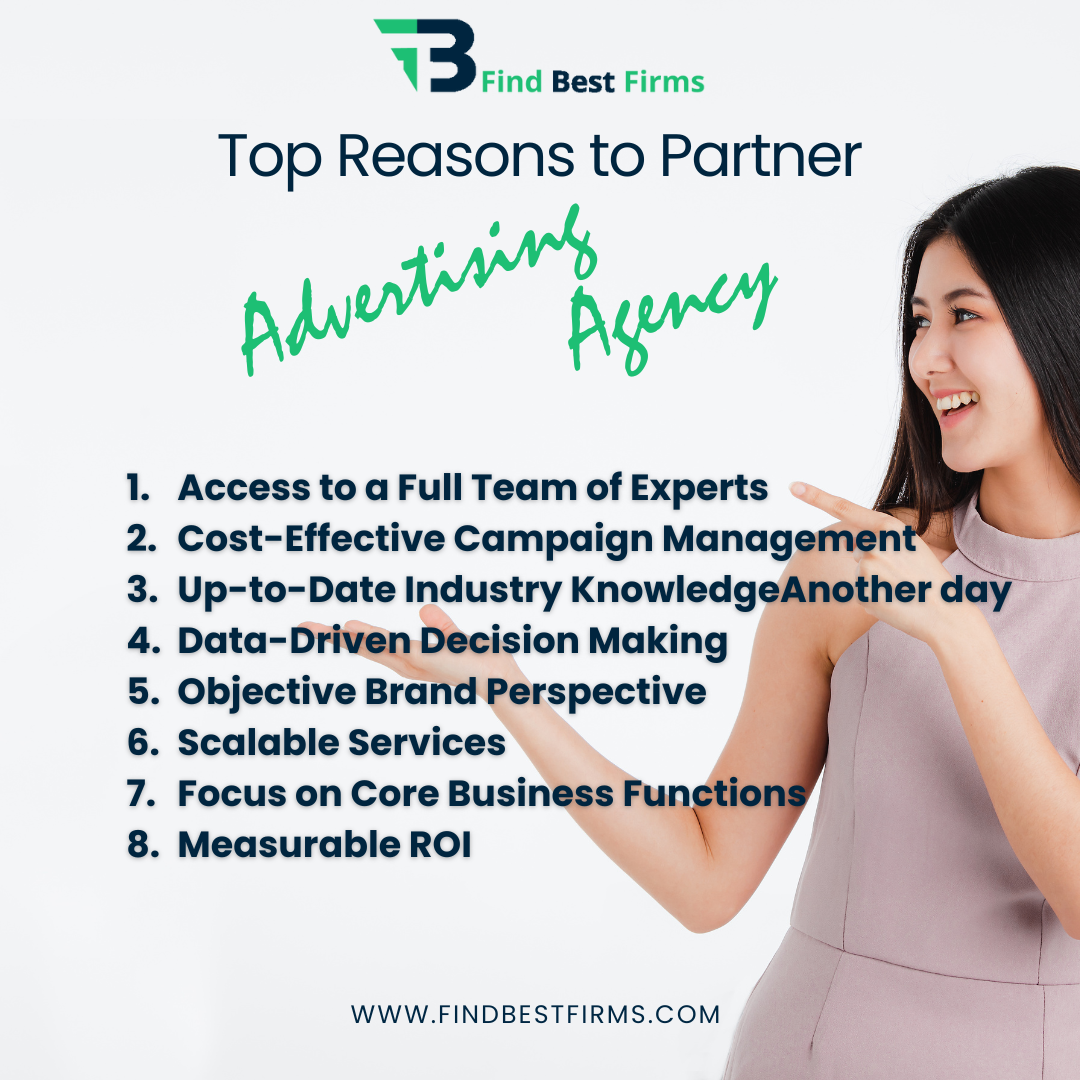
The value of an agency depends on the work it handles and the results your business needs. These are ten practical reasons companies consider outsourcing advertising.
Access to a Team of Specialists
Advertising can involve strategy, copywriting, design, media buying, analytics, and campaign management. An agency may bring these skills together without requiring you to recruit each specialist separately.
This can be especially useful when your internal team is small or lacks experience with a particular advertising channel.
More Flexible Use of Your Budget
An experienced agency can help plan budgets, test campaign ideas, and identify where spending may be inefficient. It can also explain the difference between agency fees, platform spend, creative production, and other campaign costs.
Lower costs are not guaranteed, so agree on the budget and reporting expectations before work begins.
Clearer Campaign Strategy
Rather than running disconnected ads, an agency can connect campaign decisions to specific goals, such as generating qualified leads, increasing product sales, or building awareness in a new market.
A written strategy also helps everyone understand the audience, message, budget, and metrics used to judge success.
Access to Tools and Industry Knowledge
Agencies may already use tools for campaign management, analytics, creative production, and reporting. Their teams may also have experience across different industries and campaign types.
Ask which tools are included in the fee and whether your business will retain access to its accounts and data.
Faster Campaign Execution
An established workflow can help a team move from planning to launch without building every process from scratch. This can be helpful for product launches, seasonal promotions, and time-sensitive campaigns.
Actual timelines still depend on approvals, available creative assets, tracking setup, and campaign complexity.
Fresh Ideas and an Outside Perspective
Internal teams know their products well, but familiarity can sometimes make it harder to spot unclear messaging or overlooked audiences. An external team can review the campaign from a different perspective.
The strongest partnership combines the agency's expertise with your team's knowledge of customers, products, and operations.
Campaigns That Can Scale With Your Business
As demand changes, your business may need new channels, more creative variations, or campaigns for different locations. An agency may be able to expand or reduce its support as priorities change.
Check how scope changes are priced and whether additional markets or channels require separate fees.
More Time for Core Business Activities
Managing advertising requires planning, monitoring, testing, and reporting. Outsourcing selected tasks can free your team to focus on customer service, product development, sales, and day-to-day operations.
You will still need to provide business context, approve important decisions, and review performance.
Better Performance Tracking
A capable agency should help define what success means and report against it. Depending on your objective, that may include qualified leads, purchases, cost per acquisition, revenue, or return on advertising spend.
Regular reviews can help your business identify which campaigns deserve more investment and which need changes.
Support Across Multiple Marketing Channels
Customers may encounter a brand through search ads, social media, video, email, and other channels before making a decision. An agency with the right capabilities can help coordinate these touchpoints.
Choose channels based on your audience and goals rather than trying to be present everywhere.
Advertising Agency vs. In-House Marketing Cost: Which Is Better?
The cost of hiring an agency versus building an in-house team depends on the skills required, campaign workload, location, employment costs, and level of support. An agency fee is not directly comparable to one employee's salary because an agency may provide several specialists, while an in-house team offers more day-to-day control.
| Cost or Factor | Advertising Agency | In-House Team |
|---|---|---|
| People and expertise | Access to the roles included in the contract | Recruitment and employment costs for each role |
| Management | Agency manages the agreed work and deliverables | Your business manages daily priorities and workflows |
| Tools and software | Some tools may be included; confirm the contract | Your business may need separate subscriptions |
| Flexibility | Scope can sometimes be adjusted by agreement | Capacity depends on current staffing and skills |
| Business knowledge | Needs onboarding and regular communication | Team can build deeper day-to-day product knowledge |
| Best fit | Specialist skills or variable campaign needs | Consistent workload and a need for close internal control |
Is it cheaper to hire an agency or build an in-house team?
There is no single answer. For a small business that needs several specialist skills but does not have enough work to keep a full team busy, an agency may be a practical option. A company with ongoing, high-volume marketing work may find that an in-house team provides better control and continuity.
To compare the options fairly, estimate the total monthly cost of each approach. Include salaries, benefits, recruitment, software, training, management time, agency fees, creative production, and advertising spend. Keep the media budget separate from service fees so you can see where the money goes.
How Do Advertising Agencies Measure ROI for Small Businesses?
Advertising performance should be measured against the business outcome you want, not clicks or impressions alone. A campaign can attract a large audience without producing qualified leads or sales.
Before launching, agree on the primary conversion, how it will be tracked, and the time period used for reporting. Common metrics include:
- Conversion rate: the percentage of relevant visitors who complete the desired action.
- Cost per lead: campaign cost divided by the number of leads generated.
- Customer acquisition cost: the cost of acquiring a customer, based on the costs included in your calculation.
- Return on ad spend (ROAS): attributed revenue divided by advertising spend.
- Return on investment (ROI): net return relative to the total investment, using a clearly defined cost and revenue basis.
- Lead quality: whether leads match your target audience and progress toward a sale.
For example, a local service company might care more about qualified phone calls and booked appointments than total website traffic. An online store may focus on purchases, revenue, and repeat customers. The right metrics depend on how your business earns revenue.
Ask the agency to explain its attribution method, tracking setup, reporting limitations, and how offline conversions will be handled where relevant. No agency can accurately claim every sale came from advertising without a suitable measurement method.
Advertising Priorities Businesses Should Consider in 2026
Tools and platforms change quickly, so businesses should prioritise useful capabilities instead of following every new trend. Discuss these areas with a prospective agency when they relate to your audience and campaign goals.
AI-Assisted Workflows
AI tools can support research, idea generation, creative variations, and analysis. Human review remains important for factual accuracy, brand voice, privacy, and quality.
Conversion Measurement
Reliable conversion tracking helps teams evaluate meaningful actions and improve campaign decisions. Make sure tracking is tested before interpreting performance.
Consistent Customer Journeys
Align campaign messages and landing pages across the channels your audience uses. A consistent experience can make it easier for people to understand your offer.
Creative Testing
Test different messages, formats, and offers against a clear objective. Use the results to guide future decisions rather than relying only on personal preferences.
Businesses planning a wider marketing strategy can also review the largest marketing companies around the world to understand the different types of services and capabilities offered across the industry. Large global groups and smaller specialist agencies serve different needs, so company size alone should not determine your choice.
How to Choose the Right Advertising Agency
The right partner should understand your business, explain its approach clearly, and show how it will evaluate performance. Use this checklist when comparing agencies.
- Define your goal: Decide whether you need leads, sales, brand awareness, or another measurable outcome.
- Review relevant work: Look for experience with a similar audience, service, product, or campaign type.
- Ask who will handle the account: Understand the team's roles and how communication will work.
- Compare the full cost: Separate management fees, advertising spend, production costs, and optional services.
- Check reporting: Ask for a sample report and confirm which metrics will be reviewed.
- Clarify account ownership: Confirm who controls advertising accounts, audiences, creative assets, and tracking data.
- Understand the contract: Review minimum terms, cancellation rules, deliverables, and extra charges.
- Ask about realistic expectations: Be cautious of guaranteed rankings, sales, or specific returns without evidence.
Compare potential partners based on their expertise, communication, relevant results, and fit with your goals. A clear shortlist of advertising agencies and marketing companies can help you review providers before requesting proposals.
How Advertising Works With Your Wider Marketing Strategy
Paid advertising is only one way to reach potential customers. Depending on your business model, it can work alongside useful website content, organic search, email marketing, social media, and a strong company profile.
For example, content that answers customer questions can support people who are still researching a purchase. This is where a planned approach to how content marketing drives business growth can complement campaign activity and help businesses explain their expertise.
Businesses can also improve their visibility by maintaining accurate company information on relevant directories. If local or B2B listings are part of your plan, this guide to free business listing sites in the USA can help you identify platforms worth reviewing for your market.
Frequently Asked Questions
What are the top reasons a business should partner with an advertising agency?
Common reasons include access to specialist skills, support with campaign strategy and creative work, help managing media budgets, flexible resources, and performance reporting. The value depends on the agency's expertise and whether its services match your business goals.
Is it cheaper to hire a marketing agency or build an in-house team?
An agency may be more practical when a business needs several specialist skills but cannot justify hiring a full team. An in-house team may suit companies with steady marketing workloads and a need for close internal control. Compare total costs, including salaries, tools, agency fees, and advertising spend.
How do advertising agencies measure ROI for small businesses?
Agencies can track conversions, qualified leads, cost per lead, customer acquisition cost, attributed revenue, and return on ad spend. They should agree on the main business goal and tracking method before the campaign starts, then report on results and limitations.
What services do full-service advertising agencies provide?
Depending on their scope, full-service agencies may provide strategy, audience research, creative development, media planning and buying, digital advertising, campaign management, and analytics. Confirm the exact deliverables because the term "full-service" does not mean every service is included.
What is the difference between an advertising agency and a digital marketing agency?
The services can overlap. Advertising agencies often focus on campaign planning, creative execution, and media placement, while digital marketing agencies may also handle organic search, content, email, and website optimisation. Compare each provider's actual services rather than relying on the label alone.
Why partner with a digital marketing agency instead of managing everything yourself?
A digital marketing agency can provide specialised knowledge, extra capacity, campaign management, and reporting. Managing marketing internally may offer more direct control. The better option depends on your team's skills, available time, budget, and the level of support required.
How can a small business choose an advertising agency?
Start by defining your goals and budget. Review relevant case studies, ask who will manage your campaigns, compare written proposals, confirm account ownership, and agree on how performance will be measured. Avoid choosing on price alone.
Ready to Find an Advertising Partner?
Look for a provider that understands your audience, explains its process, and can connect campaign activity to measurable business goals. Compare services and experience before deciding which agency is right for you.
Explore Advertising Agencies →Note: Agency services, pricing, and results vary. Evaluate providers using your own goals, budget, and agreed measurement criteria.