

With mobile interactions taking over the digital interactions, businesses are likely to roll out powerful mobile applications within a short time and at minimal cost. Since the development of Android and iOS involves the use of different native development, it may put pressure on the resources to meet the expectations of users in both systems. React Native would solve this problem by facilitating effective cross-platform development.
React Native enables businesses to build cross-platform mobile applications using a single codebase, without compromising performance or user experience. As demand for scalable mobile solutions grows, many organizations now prefer to hire React Native developers to accelerate development, reduce costs, and ensure long-term scalability.
What Is React Native?
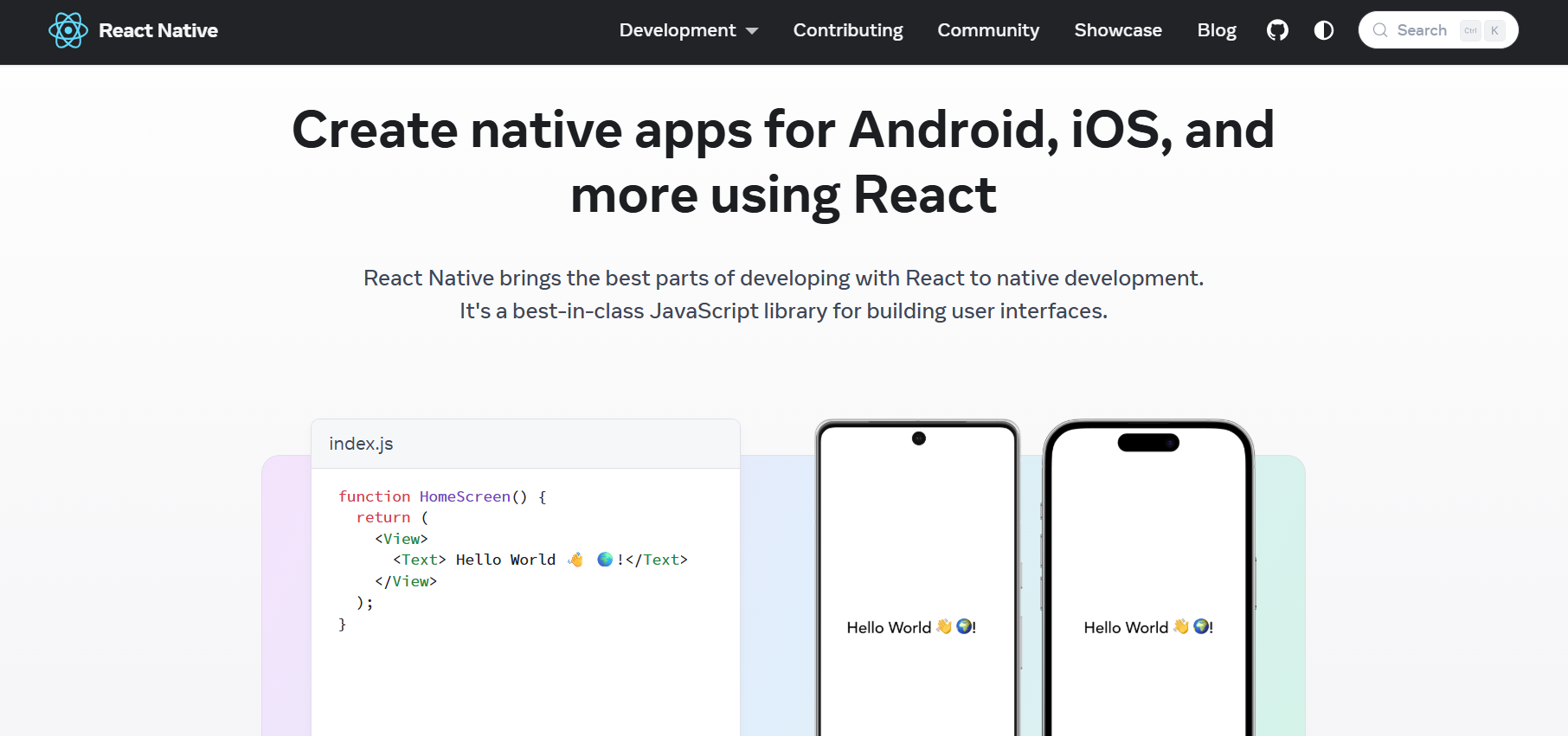
React Native is an open-source mobile application development framework developed by Meta (formerly Facebook). It allows developers to build mobile apps using JavaScript and React, while rendering components using native APIs. This approach combines the efficiency of web development with the performance of native applications.
Unlike traditional native development, which requires separate teams for Android and iOS, React Native enables developers to write a single codebase that works across platforms. This makes it an ideal choice for businesses seeking faster development cycles, consistent UI, and lower operational costs.
Reasons to Hire React Native Developers
1. Single Codebase for Multiple Platforms
Among the most notable benefits of employing React Native developers, there is the fact that one set of code allows creating both Android and iOS apps. Historically, companies were forced to create individual applications with the help of various technologies: Java or Kotlin in Android and Swift or Objective-C in iOS. This method added time, costs and complexity to development.
React Native gets rid of this problem by enabling developers to write a single code that is compatible on various platforms. This integrated strategy guarantees the uniformity of features, design and performance among devices. It also limits multiplication of efforts thus resulting in efficient and manageable development.
In business terms, one codebase eases the long-term maintenance. New features, bug fix and updates can be released across platforms at the same time, and this saves time and resources, as well as providing the same user experience.
2. Faster Development and Quicker Time-to-Market
Speed plays a critical role in today’s competitive app market. Businesses that can launch faster often gain a significant advantage over competitors. React Native developers leverage reusable components, pre-built libraries, and modern development tools to accelerate the development process.
One of React Native’s standout features is Hot Reloading. This allows developers to instantly see changes in the app without rebuilding it from scratch. As a result, testing, debugging, and iteration become much faster and more efficient.
Faster development directly translates into quicker time-to-market. Businesses can launch products sooner, test ideas rapidly, gather user feedback, and make improvements before competitors catch up. For startups and fast-growing companies, this speed can be a decisive factor in success.
3. Cost-Effective App Development
Hiring React Native developers is a highly cost-effective solution for businesses of all sizes. Since one development team can handle both Android and iOS platforms, companies avoid the expense of hiring and managing separate teams.
Cost savings extend beyond development. With a shared codebase, maintenance, updates, and enhancements require less effort and fewer resources. This significantly reduces long-term operational costs and improves return on investment.
For small businesses and startups with limited budgets, React Native provides an opportunity to build high-quality mobile applications without excessive upfront costs. For enterprises, it offers scalability and efficiency while keeping expenses under control.
4. Near-Native Performance
A common concern with cross-platform frameworks is performance. Many businesses worry that cross-platform apps may feel slower or less responsive than native applications. However, React Native addresses this concern effectively.
React Native uses native components instead of web views, enabling apps to deliver near-native performance. With proper optimization, React Native applications can match the speed, responsiveness, and smoothness of native apps.
Experienced React Native developers understand how to optimize rendering, manage memory efficiently, and integrate native modules when necessary. This ensures fast load times, smooth animations, and a high-quality user experience without sacrificing performance.
5. Strong Community and Ecosystem Support
React Native benefits from a vast and active global developer community. This strong ecosystem ensures continuous improvements, frequent updates, and long-term framework stability.
Developers have access to a wide range of third-party libraries, plugins, and development tools that simplify complex tasks and reduce development time. Comprehensive documentation, tutorials, and community forums provide reliable support when challenges arise.
For businesses, this strong ecosystem reduces development risks. It ensures that React Native remains future-ready, secure, and adaptable to evolving technology trends.
6. Consistent and Engaging User Experience
User experience is one of the most critical factors in mobile app success. React Native enables developers to create visually appealing, responsive, and consistent interfaces across platforms while still allowing platform-specific customization when needed.
Skilled React Native developers focus on intuitive navigation, smooth interactions, and responsive layouts. They ensure that the app feels natural on both Android and iOS devices, maintaining a consistent brand identity across platforms.
A well-designed user experience improves engagement, increases retention, and builds trust, ultimately driving better business outcomes.
7. Easy Integration with Existing Systems
React Native also works well with other native code, APIs, as well as third-party services. This would be a great fit in cases where businesses would like to upgrade old applications or add new functionalities to the already existing applications.
The developers are able to use the current elements and slowly switch to React Native, decreasing risk and complicating the development process. Such flexibility enables businesses to use React Native without interfering with existing systems and processes.
The integration of payment gateways, analytics tools, cloud services, or enterprise systems, all these can get businesses the flexibility they require using React Native.
8. Scalability for Business Growth
Scalability is essential for long-term business success. React Native supports scalable app architectures that allow businesses to add features, improve performance, and expand functionality as their user base grows.
Whether launching a Minimum Viable Product (MVP) or expanding an enterprise-level application, hiring React Native developers ensures the app is built with future growth in mind. Developers can easily introduce new modules, enhance performance, and adapt the app to changing business requirements.
This scalability makes React Native a future-proof solution for growing businesses.
9. Access to a Global Talent Pool
React Native’s popularity has created a large and diverse global talent pool. Businesses can easily find skilled React Native developers with experience across industries and project types.
This availability provides flexibility in hiring. Companies can hire developers on a full-time, part-time, or project basis, depending on their needs. Remote hiring also becomes easier, allowing businesses to access top talent worldwide without geographical limitations.
As a result, team scaling becomes faster, more flexible, and cost-efficient.
10. Trusted by Leading Brands
React Native is used by well-known global brands such as Facebook, Instagram, Shopify, and Walmart. Its adoption by industry leaders demonstrates its reliability, scalability, and long-term viability.
When businesses hire React Native developers, they leverage a framework that has been tested and proven in high-traffic, real-world environments. This trust factor provides confidence in the framework’s ability to support complex and demanding applications.
11. Simplified Maintenance and Updates
Maintaining a mobile app across multiple platforms can be complex and time-consuming. React Native simplifies maintenance by allowing updates through a single codebase.
Bug fixes, feature updates, and performance improvements can be deployed faster and more efficiently. This results in reduced downtime, quicker releases, and improved user satisfaction.
Simplified maintenance also allows development teams to focus more on innovation rather than routine fixes.
12. Ideal for MVP and Startup Development
For startups and entrepreneurs, React Native is an excellent choice for building Minimum Viable Products (MVPs). It enables rapid development, quick testing, and cost-efficient iteration.
Startups can launch their product faster, validate ideas, gather real user feedback, and refine features without heavy upfront investment. This agility helps startups reduce risk and make data-driven decisions early in the product lifecycle.
Hiring React Native developers empowers startups to move quickly, adapt easily, and scale confidently.
Wrapping Up
Hiring React Native is a business move to an organization that is interested in rapid development, minimized expenses, and scalable solutions on the mobile-based platform. React Native remains the platform of choice in modern applications development with a single codebase, nearly native performance, performance, and quick deployment.
In case a business is interested in finding trusted partners to develop their applications, it can be made easier by using sites such as FindBestFirms that link buyers with validated React Native app development Agencies in different parts of the globe. Through the use of an effective B2B listing service, companies will be able to find appropriate employees, minimize risks, and achieve the long-term success of mobile apps.
The selection of the appropriate React Native developers today preconditions the high-performance, user-oriented, and growth-capable mobile applications in the future.
Frequently Asked Questions (FAQs)
1. Why should businesses hire React Native developers?
Businesses hire React Native developers to build high-quality mobile applications faster and more cost-effectively. A single codebase for iOS and Android reduces development time, maintenance effort, and overall project costs.
2. Is React Native suitable for enterprise-level applications?
Yes, React Native is widely used for enterprise applications. With proper architecture, performance optimization, and experienced developers, it supports scalability, security, and high user traffic efficiently.
3. How does hiring React Native developers reduce development costs?
React Native allows one development team to handle multiple platforms, eliminating the need for separate Android and iOS teams. This significantly lowers development, testing, and long-term maintenance expenses.
4. Can React Native apps deliver native-like performance?
Yes. React Native uses native components and APIs, enabling near-native performance. Skilled developers further optimize apps for speed, responsiveness, and smooth user experiences.
5. How do I choose the right React Native app development company?
Look for proven experience, strong portfolios, technical expertise, communication skills, and post-launch support. Using a trusted B2B listing platform like FindBestFirms helps you connect with verified and reliable development partners.